
Introduction
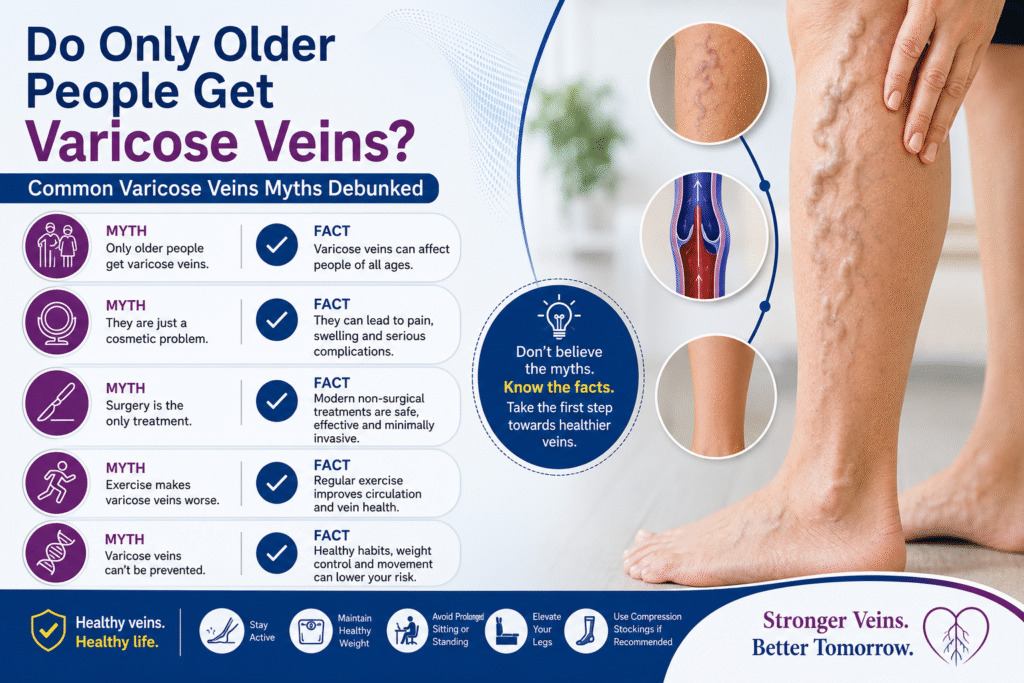
When most people think about varicose veins, they often picture an elderly person with visible, bulging veins on their legs. This widespread belief has led many younger individuals to ignore early symptoms, assuming that vein problems only occur later in life. However, this is just one of many Varicose Veins Myths that can prevent people from seeking timely medical advice and treatment.
Varicose veins are a common vascular condition that affects people of different ages, genders, and lifestyles. While age can increase the risk, it is certainly not the only factor involved. Understanding the truth behind common misconceptions can help individuals recognize symptoms early and take proactive steps toward maintaining good vein health.
In this article, we will debunk some of the most common Varicose Veins Myths and explain what really causes this condition.
What Are Varicose Veins?
Varicose veins are enlarged, twisted veins that usually appear on the legs and feet. They develop when the valves inside the veins become weak or damaged, allowing blood to flow backward and pool within the vein. This causes the vein to stretch, enlarge, and become visible beneath the skin.
Although they are often considered a cosmetic issue, varicose veins can also cause symptoms such as:
- Leg pain or aching
- Heaviness in the legs
- Swelling around the ankles
- Burning or throbbing sensations
- Night cramps
- Itching around affected veins
- Skin discoloration in advanced cases
Without proper treatment, varicose veins may progress and lead to more serious complications.
Varicose Veins Myths:
Myth 1 – Only Older People Get Varicose Veins
One of the most common Varicose Veins Myths is that only senior citizens develop the condition.
The Truth
While the risk of varicose veins does increase with age, younger adults can also be affected. In fact, many people begin noticing symptoms in their 20s, 30s, or 40s.
Several factors can contribute to the development of varicose veins at a younger age, including:
- Family history of vein disease
- Long hours of standing or sitting
- Pregnancy
- Obesity
- Hormonal changes
- Lack of physical activity
If you have a genetic predisposition or a lifestyle that places pressure on your veins, age becomes only one part of the equation.
Myth 2 – Varicose Veins Are Just a Cosmetic Problem
Many people believe that varicose veins only affect appearance and don’t require medical attention.
The Truth
Although visible veins may initially seem harmless, untreated varicose veins can lead to a variety of health concerns.
Potential complications include:
- Chronic leg pain
- Persistent swelling
- Skin thickening and discoloration
- Venous ulcers
- Blood clot formation
- Chronic venous insufficiency
Seeking treatment early can help prevent these complications and improve overall quality of life.
Myth 3 – Only Women Get Varicose Veins
Because pregnancy and hormonal fluctuations are known risk factors, many assume that varicose veins only affect women.
The Truth
Men can develop varicose veins too.
While women may experience a slightly higher risk due to hormonal influences, men are also susceptible, particularly if they have:
- A family history of vein disorders
- Occupations that involve prolonged standing
- Obesity
- Sedentary lifestyles
- Aging-related vein changes
Unfortunately, many men delay seeking treatment because they mistakenly believe vein disease is primarily a women’s health issue.
Myth 4 – Exercise Makes Varicose Veins Worse
Some individuals avoid physical activity after noticing varicose veins because they fear exercise may increase pressure on the veins.
The Truth
In most cases, exercise is actually beneficial.
Regular physical activity helps:
- Improve blood circulation
- Strengthen calf muscles
- Reduce venous pressure
- Prevent blood pooling in the legs
- Support healthy body weight
Low-impact activities such as walking, swimming, cycling, and yoga are often recommended for people with varicose veins.
However, individuals with severe symptoms should consult a vascular specialist for personalized guidance.
Myth 5 – Crossing Your Legs Causes Varicose Veins
This is one of the oldest and most widely believed misconceptions.
The Truth
Crossing your legs does not directly cause varicose veins.
Varicose veins primarily develop due to weakened vein valves, genetics, hormonal changes, and prolonged pressure on the veins.
While sitting for extended periods in any position may temporarily reduce circulation, crossing your legs alone is not responsible for creating varicose veins.
Myth 6 – Surgery Is the Only Treatment Option
Many people avoid consulting a specialist because they fear painful surgery and long recovery periods.
The Truth
Modern vein treatments have evolved significantly.
Today, minimally invasive procedures offer excellent results with little downtime.
Popular treatment options include:
Endovenous Laser Treatment (EVLT)
A laser fiber is inserted into the affected vein to seal it from within, redirecting blood flow to healthier veins.
Radiofrequency Ablation (RFA)
Heat generated by radiofrequency energy closes the damaged vein, reducing symptoms and improving circulation.
Sclerotherapy
A specialized solution is injected into smaller varicose or spider veins, causing them to collapse and gradually fade.
Most patients can return to their normal activities within a short period after treatment.
Myth 7 – Varicose Veins Can’t Be Prevented
Many people assume that developing varicose veins is inevitable, especially if they have a family history.
The Truth
Although genetics play an important role, certain lifestyle habits can help reduce the risk and slow disease progression.
Preventive measures include:
- Maintaining a healthy weight
- Exercising regularly
- Avoiding prolonged sitting or standing
- Elevating your legs when resting
- Wearing compression stockings when recommended
- Staying hydrated
- Following a balanced diet rich in fiber
While prevention may not guarantee complete protection, these habits can significantly improve vein health.
When Should You See a Vein Specialist?
If you experience any of the following symptoms, it may be time to consult a vascular specialist:
- Persistent leg pain
- Swelling in the legs or ankles
- Visible bulging veins
- Skin discoloration
- Non-healing wounds near the ankles
- Feelings of heaviness or fatigue in the legs
Early diagnosis and treatment often lead to better outcomes and can prevent complications from developing.
Conclusion
Believing common Varicose Veins Myths can delay diagnosis and treatment, allowing symptoms to worsen over time. The reality is that varicose veins can affect both men and women, young and old alike. They are more than just a cosmetic concern and can impact your overall vascular health if left untreated.
Understanding the facts behind these Varicose Veins Myths empowers you to recognize symptoms early, adopt healthy lifestyle habits, and seek appropriate medical care when needed. If you’re experiencing signs of vein disease, consulting a specialist can help you explore effective treatment options and protect your long-term vein health.
At Lumina Vein Center, our team specializes in advanced, minimally invasive treatments designed to provide lasting relief and improve your quality of life. Don’t let myths stand in the way of healthier legs and better vascular health.
📍 Lumina Vein & Vascular Center
👨⚕️ Dr. Uday Ravi MBBS, MS, FMAS, FIAGES, FISCP, FALS, FARIS, DMAS (France)
Consultant Vascular & Laser Surgeon
📞 +91 88844 77725
🌐 www.luminaveincenter.com