
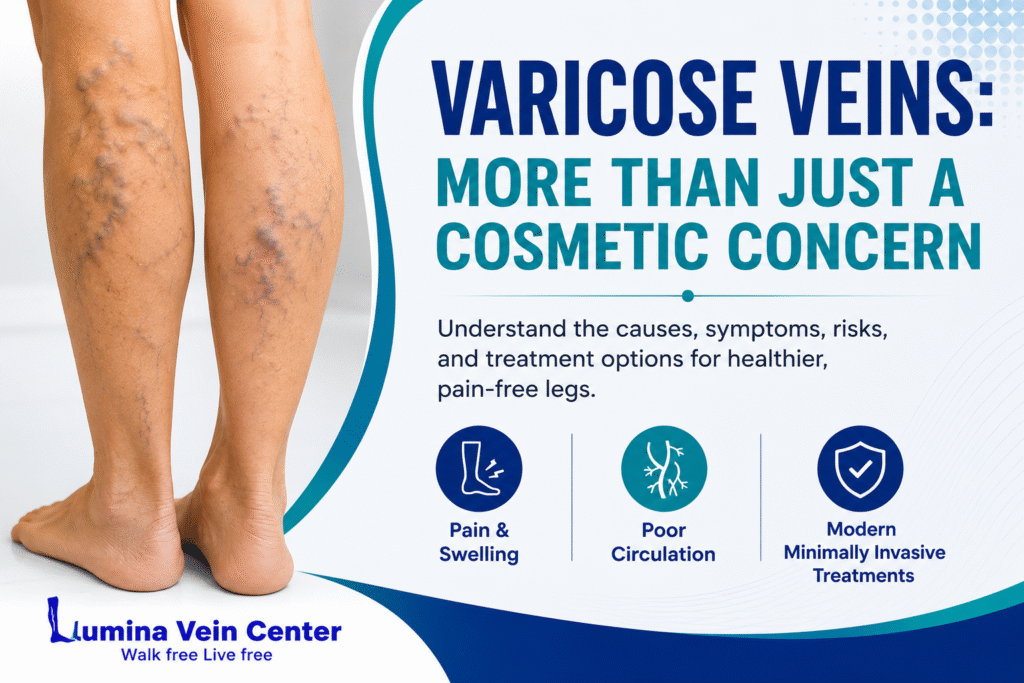
Many people believe varicose veins are simply a cosmetic issue—a few visible, twisted veins that affect the appearance of the legs. While it’s true that they can impact confidence, varicose veins are often a sign of an underlying vein condition that can affect your circulation and overall vascular health.
Ignoring the symptoms may lead to discomfort, swelling, skin changes, and even serious complications if left untreated. Understanding the causes, symptoms, and available treatment options can help you take timely action and protect your vein health.
In this article, we’ll explore why varicose veins deserve more attention than they often receive.
What Are Varicose Veins?
Varicose veins are enlarged, swollen, and twisted veins that commonly develop in the legs. They occur when the valves inside the veins become weak or damaged, making it difficult for blood to flow back toward the heart.
Instead of moving upward efficiently, blood begins to pool inside the veins. This increased pressure causes the veins to enlarge and become visible beneath the skin.
Although varicose veins can develop anywhere, they most frequently affect the legs because these veins work against gravity every day.
Why Do Varicose Veins Develop?
Several factors contribute to the development of varicose veins.
1. Weak or Damaged Vein Valves
Healthy veins contain tiny valves that keep blood flowing in one direction. When these valves weaken, blood flows backward and collects inside the vein.
2. Family History
Genetics plays a significant role. If one or both parents have varicose veins, your chances of developing them increase considerably.
3. Aging
As we age, vein walls naturally lose elasticity, making it easier for veins to stretch and valves to weaken.
4. Pregnancy
Hormonal changes, increased blood volume, and pressure from the growing uterus can contribute to varicose veins during pregnancy.
5. Prolonged Standing or Sitting
Jobs that require standing or sitting for extended periods can reduce healthy blood circulation and increase pressure in the leg veins.
6. Obesity
Carrying excess body weight places additional strain on the veins, increasing the likelihood of developing varicose veins.
Common Symptoms of Varicose Veins
Not everyone experiences pain, but varicose veins often produce symptoms that affect daily life.
Common signs include:
- Visible blue or purple twisted veins
- Heavy or aching legs
- Swelling around the ankles
- Burning or throbbing sensations
- Nighttime leg cramps
- Itching around affected veins
- Leg fatigue after standing
- Restlessness in the legs
Many people notice symptoms worsening after standing for long periods or at the end of the day.
Why Varicose Veins Shouldn’t Be Ignored
Although some people experience only mild symptoms, untreated varicose veins can progress over time.
Potential complications include:
Chronic Venous Insufficiency (CVI)
Poor blood circulation can eventually impair the veins’ ability to return blood efficiently to the heart.
Skin Changes
Long-standing vein disease may cause:
- Darkening of the skin
- Thickened skin
- Dryness
- Inflammation
Venous Leg Ulcers
Poor circulation may result in slow-healing wounds around the ankles that require specialized medical care.
Blood Clots
Some patients develop superficial vein inflammation or blood clots that need prompt medical evaluation.
Bleeding
Large varicose veins located close to the skin surface may rupture after minor injuries, leading to unexpected bleeding.
Who Is Most at Risk?
Several groups are more likely to develop varicose veins, including:
- Adults over 40
- Women
- Pregnant women
- Individuals with a family history
- People who stand for long hours
- Office workers who sit all day
- People who are overweight or obese
- Individuals with a sedentary lifestyle
Having one or more risk factors doesn’t guarantee you’ll develop varicose veins, but it does increase the likelihood.
Can Varicose Veins Be Prevented?
While genetics cannot be changed, healthy lifestyle habits can reduce your risk and slow disease progression.
Stay Active
Walking, cycling, and swimming encourage healthy blood circulation.
Maintain a Healthy Weight
Reducing excess body weight lowers pressure on your leg veins.
Elevate Your Legs
Raising your legs for 15–20 minutes helps improve venous blood flow.
Avoid Standing or Sitting Too Long
Move around every 30–60 minutes to keep circulation flowing.
Wear Compression Stockings
For people at higher risk, compression stockings may help improve circulation and reduce swelling.
Eat a Balanced Diet
A diet rich in fruits, vegetables, whole grains, and fiber supports healthy blood vessels.
Stay Hydrated
Proper hydration supports healthy circulation throughout the body.
Modern Treatment Options
The good news is that today’s treatments for varicose veins are far more advanced than traditional surgery.
Depending on the severity of the condition, your vein specialist may recommend:
Endovenous Laser Treatment (EVLT)
A minimally invasive laser procedure that closes the affected vein using heat.
Radiofrequency Ablation (RFA)
Radiofrequency energy seals damaged veins with minimal discomfort and recovery time.
Ultrasound-Guided Foam Sclerotherapy
A specialized foam medication is injected into affected veins, causing them to close naturally.
Medical Compression Therapy
Compression stockings can help relieve symptoms and improve circulation, particularly in early stages.
Most modern treatments are outpatient procedures, allowing patients to return to normal activities within a short period.
When Should You See a Vein Specialist?
Schedule an evaluation if you experience:
- Persistent leg pain
- Swelling that doesn’t improve
- Visible enlarging veins
- Skin discoloration
- Non-healing wounds
- Sudden bleeding from a vein
- Increasing heaviness or fatigue in your legs
Early diagnosis often leads to simpler treatment and better long-term outcomes.
Conclusion
Varicose veins are much more than a cosmetic concern. They can be an early sign of chronic vein disease that affects blood circulation and may lead to serious complications if ignored. Fortunately, early diagnosis, healthy lifestyle habits, and modern minimally invasive treatments can significantly improve symptoms and restore vein health.
If you’re experiencing symptoms of varicose veins, don’t wait until they become more severe. Consulting a vein specialist can help you receive an accurate diagnosis and a personalized treatment plan to keep your legs healthy, comfortable, and active.
At Lumina Vein Center, our team specializes in advanced, minimally invasive treatments designed to provide lasting relief and improve your quality of life. Don’t let myths stand in the way of healthier legs and better vascular health.
📍 Lumina Vein & Vascular Center
👨⚕️ Dr. Uday Ravi MBBS, MS, FMAS, FIAGES, FISCP, FALS, FARIS, DMAS (France)
Consultant Vascular & Laser Surgeon
📞 +91 88844 77725
🌐 www.luminaveincenter.com
Frequently Asked Questions (FAQs)
1. Are varicose veins only a cosmetic problem?
No. While varicose veins may affect the appearance of your legs, they can also indicate underlying vein disease. If left untreated, they may cause pain, swelling, skin changes, venous ulcers, and other complications. Early evaluation by a vein specialist can help prevent these issues.
2. What causes varicose veins?
Varicose veins develop when the valves inside your veins become weak or damaged, causing blood to pool in the veins. Common risk factors include genetics, aging, pregnancy, obesity, prolonged standing or sitting, and a sedentary lifestyle.
3. What are the early symptoms of varicose veins?
Early symptoms may include:
- Aching or heavy legs
- Swollen ankles or feet
- Visible blue or purple veins
- Leg cramps, especially at night
- Itching around the affected veins
- Burning or throbbing sensations
- Leg fatigue after standing for long periods
4. Can varicose veins go away on their own?
No. Varicose veins do not disappear without treatment. While lifestyle changes such as regular exercise, weight management, and wearing compression stockings can help manage symptoms and slow progression, medical treatment is often needed to eliminate the affected veins.
5. Who is most likely to develop varicose veins?
People at higher risk include:
- Adults over 40
- Women
- Pregnant women
- Individuals with a family history of varicose veins
- People who stand or sit for long hours
- Individuals who are overweight or obese
6. How are varicose veins diagnosed?
A vein specialist will typically perform a physical examination and may recommend a Duplex Ultrasound to evaluate blood flow and identify damaged veins. This painless test helps determine the most appropriate treatment plan.
7. What are the treatment options for varicose veins?
Modern treatments are minimally invasive and may include:
- Endovenous Laser Treatment (EVLT)
- Radiofrequency Ablation (RFA)
- Ultrasound-Guided Foam Sclerotherapy
- Compression Therapy
Most procedures are performed on an outpatient basis with little downtime.
8. Can varicose veins be prevented?
Although not all cases can be prevented, you can reduce your risk by:
- Staying physically active
- Maintaining a healthy weight
- Avoiding prolonged sitting or standing
- Elevating your legs when resting
- Wearing compression stockings if recommended
- Eating a balanced, high-fiber diet
- Staying well hydrated
9. When should I see a doctor for varicose veins?
You should consult a vein specialist if you experience:
- Persistent leg pain or heaviness
- Swelling that does not improve
- Skin discoloration around the ankles
- Bleeding from a varicose vein
- Slow-healing wounds or ulcers
- Sudden worsening of symptoms
Early diagnosis can help prevent complications and improve treatment outcomes.
10. Are modern varicose vein treatments painful?
Most modern varicose vein treatments are minimally invasive and involve only mild discomfort. Procedures such as EVLT and RFA are performed under local anesthesia, allowing most patients to return to their daily activities within a day or two.