
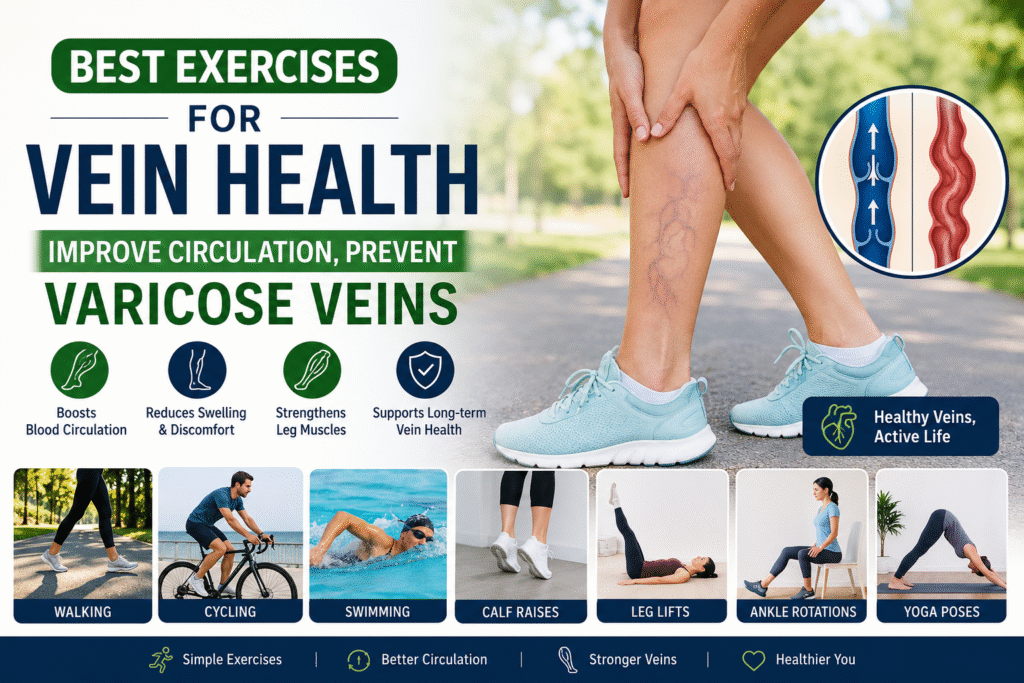
Poor blood circulation in the legs can lead to discomfort, swelling, and eventually conditions such as varicose veins. Fortunately, regular physical activity can significantly improve vein health by promoting healthy blood flow and strengthening the muscles that support your veins.
If you’re looking for the best exercises for vein health, this guide will help you understand how exercise improves circulation and which activities can help prevent or manage varicose veins naturally.
Why Exercise Is Important for Vein Health
Your veins work against gravity to return blood from your legs to your heart. When blood pools in the veins due to weakened vein walls or faulty valves, varicose veins can develop.
Regular exercise helps:
-
- Improve blood circulation in the legs
- Strengthen calf muscles that support vein function
- Reduce swelling and leg heaviness
- Lower the risk of developing varicose veins
- Support healthy weight management
- Enhance overall vascular health
For people with existing vein problems, exercise can help reduce symptoms and improve quality of life.
1. Walking: The best exercise for Varicose Veins
Walking is one of the simplest and most effective exercises for vein health and supporting healthy veins.
Benefits of Walking for Vein Health
-
- Activates calf muscles that help pump blood back to the heart
- Improves circulation in the lower legs
- Reduces blood pooling
- Easy to perform for people of all fitness levels
How Much Should You Walk?
Aim for at least 30 minutes of brisk walking five days a week.
2. Cycling for Better Blood Flow
Cycling is a low-impact cardiovascular exercises for vein health that helps strengthen the leg muscles while promoting healthy circulation.
Benefits
-
- Improves blood flow throughout the legs
- Strengthens calves and thighs
- Supports healthy vein function
- Gentle on the joints
You can cycle outdoors or use a stationary bike at home or the gym.
3. Swimming: A Low-Impact Exercise for Healthy Veins
Swimming is the exercises for vein health recommended by vein specialists because the water supports your body weight while encouraging blood circulation.
Benefits of Swimming
-
- Improves circulation without placing stress on the legs
- Helps reduce swelling
- Supports cardiovascular health
- Suitable for all age groups
Swimming is particularly beneficial for individuals who experience pain or discomfort from varicose veins.
4. Calf Raises to Strengthen Leg Muscles
Strong calf muscles play an important role in maintaining healthy circulation.
How to Perform Calf Raises
-
- Stand upright with your feet shoulder-width apart.
- Slowly raise your heels off the ground.
- Hold for 2–3 seconds.
- Lower your heels back down.
Recommended Repetitions
Perform 15–20 repetitions for 2–3 sets daily.
5. Leg Lifts to Improve Circulation
Leg lifts help stimulate blood flow and strengthen the muscles that support healthy veins.
Steps
-
- Lie flat on your back.
- Slowly raise one leg.
- Hold briefly and lower it.
- Repeat with the opposite leg.
Perform 10–15 repetitions on each side.
6. Ankle Rotations for People Who Sit Long Hours
If your job requires prolonged sitting, ankle rotations can help improve circulation and reduce blood pooling.
Benefits
-
- Improves blood circulation in the lower legs
- Reduces stiffness
- Helps prevent swelling
Perform ankle circles several times throughout the day.
7. Yoga for Improved Vein Health
Yoga combines stretching, strengthening, and relaxation techniques that support healthy circulation.
Best Yoga Poses for Vein Health
Effective Ways to Prevent or Delay Varicose Veins
-
- Legs-Up-the-Wall Pose
- Downward-Facing Dog
- Bridge Pose
- Mountain Pose
These poses encourage blood flow from the legs back toward the heart.
Exercises to Avoid If You Have Varicose Veins
While physical activity is beneficial, certain exercises may increase pressure within the veins.
Consider limiting:
-
- Heavy weightlifting
- High-impact jumping exercises
- Intense squats with excessive weights
- Activities that involve prolonged standing without movement
- Consult a vein specialist if you have severe varicose veins or chronic leg pain.
Additional Tips to Prevent Varicose Veins Naturally
In addition to regular exercise:
-
- Maintain a healthy body weight
- Avoid sitting or standing for long periods
- Elevate your legs whenever possible
- Stay hydrated
- Wear compression stockings if recommended by your doctor
- Follow a balanced diet rich in fruits, vegetables, and fiber
When Should You Seek Varicose Vein Treatment?
Exercise can improve circulation and reduce symptoms, but it cannot remove existing varicose veins.
You should consult a vein specialist if you experience:
-
- Persistent leg pain
- Swelling in the legs or ankles
- Bulging or twisted veins
- Skin discoloration around the ankles
- Heaviness or fatigue in the legs
Modern varicose vein treatments such as laser therapy and minimally invasive procedures can provide long-term relief.
Frequently Asked Questions (FAQs)
Q1: What is the best exercise for improving vein health?
👉 Walking is considered one of the best exercises for vein health because it activates the calf muscles, which help pump blood from the legs back to the heart and improve circulation.
Q2: Can exercise get rid of varicose veins?
👉 No. Exercise can improve blood circulation, reduce symptoms, and slow the progression of varicose veins, but it cannot eliminate existing damaged veins.
Q3: Is walking good for people with varicose veins?
👉 Yes. Walking is a low-impact activity that improves circulation, reduces blood pooling, and helps relieve symptoms such as leg heaviness and swelling.
Q4: Are there exercises to avoid if I have varicose veins?
👉 Heavy weightlifting, high-impact jumping exercises, and activities involving prolonged standing may increase pressure on the veins and should be performed cautiously.
Q5: How often should I exercise for healthy veins?
👉 Aim for at least 150 minutes of moderate physical activity per week, such as walking, cycling, swimming, or yoga, to support healthy circulation and vein function.
Q6: Can yoga help improve blood circulation in the legs?
👉 Yes. Certain yoga poses, such as Legs-Up-the-Wall Pose and Downward-Facing Dog, can promote venous return and improve circulation in the lower extremities.
Q7: When should I see a vein specialist?
👉 You should consult a vein specialist if you experience leg pain, swelling, visible bulging veins, skin discoloration, itching, or heaviness that affects your daily activities.
Takeaway
Regular exercise is one of the most effective ways to improve blood circulation, strengthen leg muscles, and support long-term vein health. Activities such as walking, cycling, swimming, yoga, and calf-strengthening exercises can help reduce discomfort and lower the risk of varicose vein progression.
While exercise offers significant benefits, it cannot repair damaged vein valves. If you notice symptoms such as swelling, pain, heaviness, or visible varicose veins, seeking professional evaluation early can help prevent complications and ensure timely treatment.
📍 Lumina Vein & Vascular Center
👨⚕️ Dr. Uday Ravi MBBS, MS, FMAS, FIAGES, FISCP, FALS, FARIS, DMAS (France)
Consultant Vascular & Laser Surgeon
📞 +91 88844 77725
🌐 www.luminaveincenter.com