
Introduction
Leg pain, swelling, heaviness, or visible veins are often associated with varicose veins, but these symptoms may also indicate peripheral vascular disease. Although both conditions affect the legs and can impact mobility and quality of life, they involve different blood vessels and require different treatment approaches.
Peripheral vascular disease (PVD) is a condition that affects the blood vessels outside the heart and brain, most commonly the arteries supplying the legs and feet. It reduces blood flow due to narrowed or blocked arteries, while varicose veins occur when weakened vein valves allow blood to pool in the veins. Because some symptoms overlap, many people find it difficult to distinguish between the two.
Understanding the symptoms, causes, and differences between peripheral vascular disease and varicose veins is essential for early diagnosis and effective treatment. In this article, we’ll explore both conditions and explain when it’s time to consult a vascular specialist.
What Is Peripheral Vascular Disease?
Peripheral vascular disease refers to diseases affecting blood vessels outside the heart and brain. The most common form occurs when fatty deposits (plaque) build up inside the arteries, narrowing them and reducing blood flow to the legs. This condition is also commonly known as Peripheral Artery Disease (PAD).
Without adequate blood circulation, the muscles and tissues in the legs receive less oxygen, leading to pain, weakness, and delayed wound healing. If left untreated, peripheral vascular disease can increase the risk of ulcers, infections, and, in severe cases, limb-threatening complications.
What Are Varicose Veins?
Unlike peripheral vascular disease, varicose veins affect the veins rather than the arteries. Veins carry blood back to the heart, and they contain one-way valves that prevent blood from flowing backward.
When these valves weaken or become damaged, blood pools inside the veins, causing them to enlarge and become twisted. Varicose veins commonly appear as blue or purple bulging veins on the legs and may cause aching, heaviness, swelling, itching, or skin discoloration.
Although varicose veins are generally not life-threatening, untreated cases can lead to chronic venous insufficiency, skin ulcers, or blood clots.
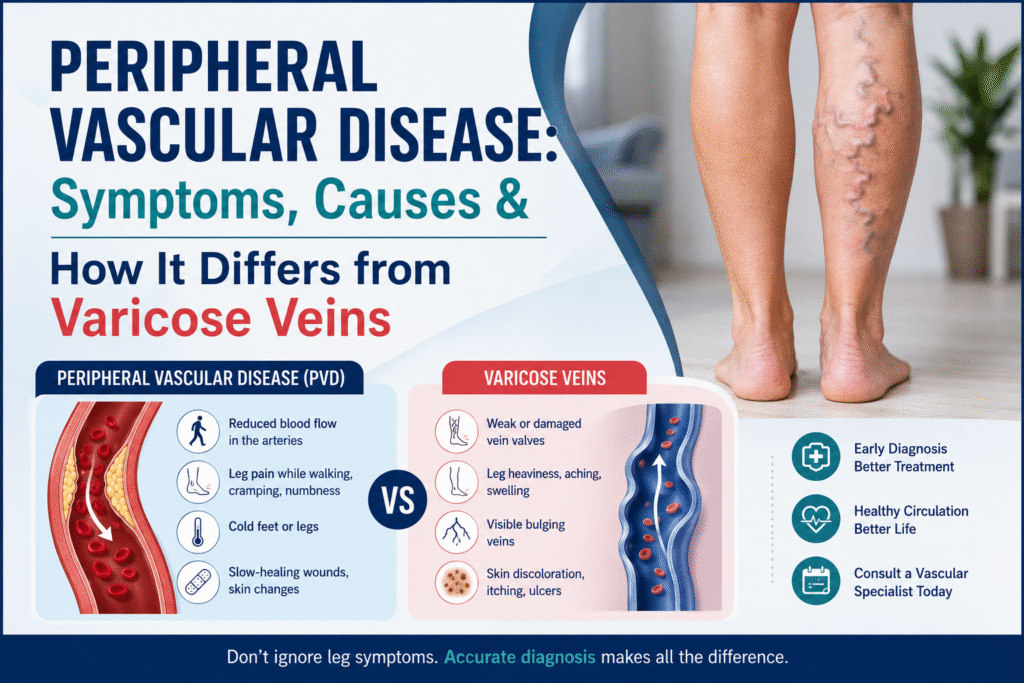
Peripheral Vascular Disease vs. Varicose Veins
Although both conditions affect the legs, they differ in several important ways.
| Peripheral Vascular Disease | Varicose Veins |
| Affects the arteries | Affects the veins |
| Caused by narrowed or blocked arteries | Caused by weakened vein valves |
| Reduces blood flow to the legs | Causes blood pooling in the veins |
| Leg pain worsens while walking | Leg discomfort worsens after prolonged standing |
| Cold feet and numbness are common | Visible bulging veins are common |
| May lead to poor wound healing and ulcers | May cause swelling, skin discoloration, and venous ulcers |
Because both conditions can cause leg discomfort, an evaluation by a vascular specialist is important to determine the correct diagnosis.
Symptoms of Peripheral Vascular Disease
Recognizing the symptoms of peripheral vascular disease early can prevent serious complications.
1. Leg Pain While Walking
One of the most common symptoms is intermittent claudication—pain, cramping, or aching in the calves, thighs, or buttocks that occurs during walking and improves with rest.
Unlike varicose veins, where discomfort is often described as heaviness after standing, pain from peripheral vascular disease occurs because muscles are not receiving enough oxygen-rich blood.
2. Cold Feet or Legs
Poor blood circulation may cause one foot or leg to feel noticeably colder than the other. This symptom is uncommon in uncomplicated varicose veins and often indicates arterial disease.
3. Numbness or Weakness
Reduced blood supply can lead to tingling, numbness, or weakness in the legs, making it difficult to walk long distances.
4. Slow-Healing Wounds
Cuts, blisters, or sores on the feet that heal slowly may be a warning sign of peripheral vascular disease. Poor circulation limits the body’s ability to deliver oxygen and nutrients needed for healing.
5. Skin Changes
The skin may appear pale, shiny, bluish, or cool to the touch due to reduced blood flow.
With varicose veins, skin changes are usually brownish discoloration, itching, or thickening around the ankles.
6. Weak Pulse in the Feet
A weak or absent pulse in the feet is a classic sign of peripheral vascular disease and is usually detected during a vascular examination.
Causes and Risk Factors of Peripheral Vascular Disease
The most common cause of peripheral vascular disease is atherosclerosis, where plaque builds up inside the arteries and restricts blood flow.
Other contributing factors include:
- Smoking
- Diabetes
- High blood pressure
- High cholesterol
- Obesity
- Physical inactivity
- Aging
- Family history of vascular disease
Many of these risk factors also contribute to varicose veins, which is why some individuals develop both conditions.
Can You Have Both Peripheral Vascular Disease and Varicose Veins?
Yes. Although peripheral vascular disease and varicose veins affect different blood vessels, they can occur together.
People who have diabetes, obesity, high cholesterol, or a history of smoking are at a higher risk of developing both arterial and venous disease.
Having both conditions may increase leg discomfort, delay wound healing, and make treatment more complex. A vascular specialist can perform advanced tests to identify the exact cause of your symptoms and develop a personalized treatment plan.
How Are These Conditions Diagnosed?
A thorough vascular evaluation helps distinguish peripheral vascular disease from varicose veins.
Your specialist may recommend:
- Physical examination
- Duplex Ultrasound to evaluate blood flow in both arteries and veins
- Ankle-Brachial Index (ABI) to compare blood pressure in the legs and arms
- CT Angiography or MR Angiography for detailed vascular imaging when necessary
Early diagnosis ensures the most effective treatment and reduces the risk of complications.
Treatment Options
Treatment depends on whether the condition affects the arteries, the veins, or both.
Peripheral Vascular Disease Treatment
Treatment may include:
- Lifestyle modifications
- Smoking cessation
- Regular walking programs
- Blood pressure and cholesterol control
- Blood-thinning medications
- Balloon angioplasty
- Stent placement
- Vascular surgery in advanced cases
Varicose Vein Treatment
Modern treatments for varicose veins are minimally invasive and may include:
- Compression stockings
- Endovenous Laser Treatment (EVLT)
- Radiofrequency Ablation (RFA)
- VenaSeal Closure System
- Ultrasound-guided Sclerotherapy
Your vascular specialist will recommend the most appropriate treatment based on your condition and overall health.
When Should You See a Vascular Specialist?
Don’t ignore symptoms such as:
- Persistent leg pain while walking
- Cold feet
- Visible varicose veins
- Leg swelling
- Slow-healing wounds
- Skin discoloration
- Numbness or weakness
Early diagnosis can prevent complications and improve long-term vascular health.
Conclusion
Although peripheral vascular disease and varicose veins affect different parts of the circulatory system, they often share similar symptoms, making professional evaluation essential. While peripheral vascular disease reduces blood flow through narrowed arteries, varicose veins result from weakened vein valves that allow blood to pool in the legs.
If you’re experiencing leg pain, swelling, visible veins, cold feet, or slow-healing wounds, don’t ignore these warning signs. Early diagnosis can help prevent complications and improve your quality of life.
At Lumina Vein and Vascular Center, our experienced vascular specialists provide comprehensive diagnosis and advanced treatment for both peripheral vascular disease and varicose veins. Whether you need evaluation for poor circulation or minimally invasive vein treatment, we’re committed to helping you achieve healthier legs and better vascular health.
Frequently Asked Questions (FAQs)
1. Is peripheral vascular disease the same as varicose veins?
No. Peripheral vascular disease affects the arteries and reduces blood flow, while varicose veins affect the veins and result from weakened vein valves.
2. Can varicose veins cause peripheral vascular disease?
No. Varicose veins do not directly cause peripheral vascular disease, but both conditions can occur together and share similar symptoms.
3. What is the first symptom of peripheral vascular disease?
The earliest symptom is usually leg pain or cramping during walking that improves with rest, known as intermittent claudication.
4. Can peripheral vascular disease be treated?
Yes. Treatment may include lifestyle changes, medications, minimally invasive vascular procedures, or surgery, depending on the severity.
5. When should I consult a vascular specialist?
You should seek medical evaluation if you experience persistent leg pain, swelling, cold feet, visible varicose veins, numbness, or slow-healing wounds.