
Introduction
Understanding the varicose vein stages can help you recognize changes in your legs and understand when it may be time to seek professional evaluation. Varicose veins are enlarged, twisted veins that usually develop in the legs when blood does not flow efficiently back toward the heart. Weak or damaged vein valves can allow blood to flow backward and pool in the veins, increasing pressure and causing the veins to become enlarged.
Varicose veins can cause more than visible, bulging veins. Depending on the underlying venous disease, people may experience aching, heaviness, swelling, itching, skin changes, or ulcers. However, not everyone with varicose veins will develop advanced complications. Understanding the varicose vein stages can help you recognize changes early and discuss appropriate management with a vascular specialist.
In this article, we explain the different clinical stages used to describe chronic venous disease, the symptoms associated with each stage, how varicose veins may progress, and the treatment options that may be considered.
What Causes Varicose Veins?
Before looking at the varicose vein stages, it is important to understand how veins normally work.
Veins carry blood from the legs back toward the heart. Because blood has to travel upward against gravity, the veins contain small one-way valves that help prevent blood from flowing backward.
When these valves become weak or stop working properly, blood can flow backward, a process known as venous reflux. This increases pressure within the veins and can eventually cause them to enlarge and become visible beneath the skin.
Factors that may increase the likelihood of developing venous disease include:
- Family history of venous problems
- Increasing age
- Pregnancy
- Obesity
- Prolonged standing
- Prolonged sitting or limited movement
- Previous deep vein thrombosis (DVT)
Understanding the Varicose Vein Stages
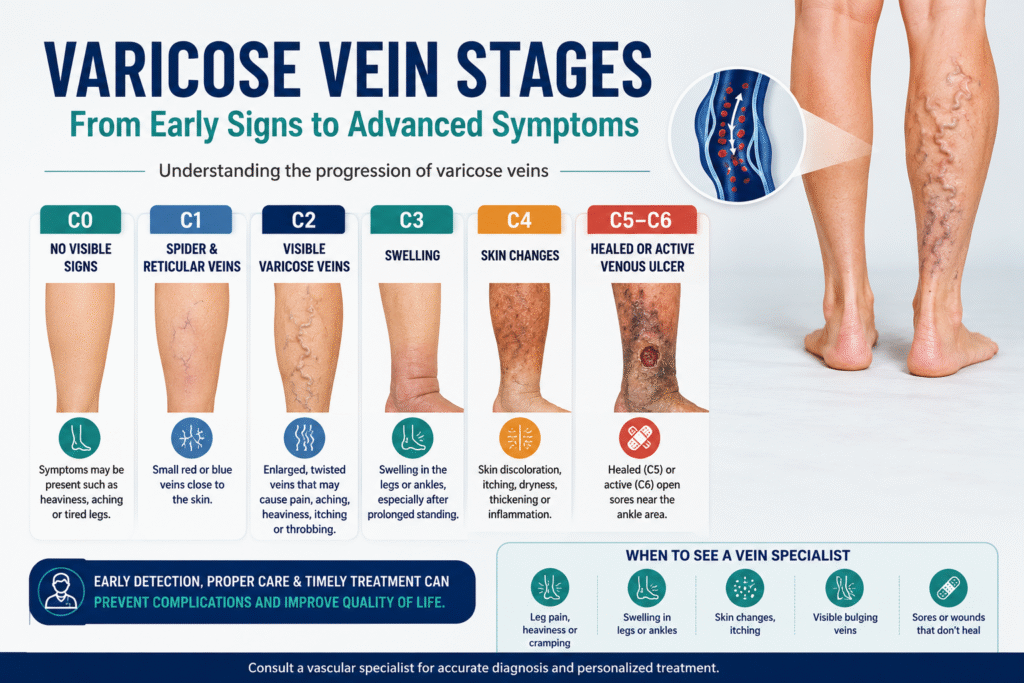
When discussing the varicose vein stages, healthcare professionals often use the CEAP classification to describe the clinical features of chronic venous disease.
The clinical categories range from C0 to C6. Importantly, CEAP is a descriptive classification system rather than a simple linear severity scale. C2 specifically represents varicose veins, while C3–C6 describe progressively more advanced manifestations of chronic venous disease.
Let’s look at each category.
Stage C0: No Visible Signs
C0 means there are no visible or palpable signs of chronic venous disease.
Some people can still experience symptoms such as:
- Leg heaviness
- Aching
- Tired legs
- Discomfort
- A feeling of tightness
The absence of visible veins does not necessarily mean that every possible cause of leg discomfort has been ruled out. Persistent symptoms should be evaluated rather than automatically attributed to venous disease.
Stage C1: Spider and Reticular Veins
C1 includes telangiectasias (spider veins) and reticular veins. These are smaller superficial veins that can appear red, blue, or purple beneath the skin.
Spider veins are not the same as true varicose veins. They are generally smaller and may appear as fine branching or web-like patterns.
For some people, C1 changes are primarily a cosmetic concern. Others may have symptoms associated with underlying venous disease.
Stage C2: Visible Varicose Veins
C2 is the CEAP category specifically associated with varicose veins. These are enlarged, twisted superficial veins that can become clearly visible beneath the skin.
Possible symptoms include:
- Aching
- Burning
- Cramping
- Heaviness
- Throbbing
- Itching
- Swelling
Symptoms may become more noticeable after prolonged standing or toward the end of the day. The Society for Vascular Surgery notes that common symptoms of varicose veins include heaviness, achiness, swelling, throbbing, and itching.
This is often the point when people begin looking for varicose vein treatment, particularly when symptoms start interfering with work, exercise, sleep, or everyday activities.
Stage C3: Leg or Ankle Swelling
C3 is characterized by edema , or swelling of the leg or ankle.
You may notice:
- Swelling around the ankles
- Tightness around shoes or socks
- Heaviness in the legs
- Increased swelling toward the evening
- Discomfort after standing for long periods
Persistent swelling should be evaluated because it can have several possible causes, including venous disease and other medical conditions.
Stage C4: Skin and Tissue Changes
At C4, chronic venous disease can begin producing noticeable changes in the skin and tissues of the lower legs.
These may include:
- Skin pigmentation or darkening
- Varicose eczema
- Itching
- Skin thickening
- Hardening of the tissue
- Other changes to the skin and subcutaneous tissue
The CEAP system further divides C4 into categories describing different types of skin and tissue changes.
Varicose eczema, for example, can cause itchy, swollen, dry, flaky, or discolored skin and is associated with increased pressure in the leg veins.
If you notice new skin changes around your ankles or lower legs along with varicose veins, it is important to seek medical assessment rather than treating the issue as purely cosmetic.
Stage C5: Healed Venous Ulcer
C5 refers to a healed venous leg ulcer.
Venous ulcers can develop when chronic venous disease causes long-term changes to the circulation and tissues of the lower leg. Even after an ulcer heals, the underlying venous problem may remain.
A previous venous ulcer is therefore an important sign of advanced chronic venous disease and should be appropriately evaluated to reduce the risk of recurrence.
Stage C6: Active Venous Ulcer
C6 refers to an active venous leg ulcer and represents an advanced manifestation of chronic venous disease.
A venous leg ulcer is an open wound that can be painful and slow to heal. These ulcers commonly occur around the lower leg and ankle.
Signs that an ulcer may be infected include:
- Increasing pain
- Redness or swelling around the wound
- Unpleasant-smelling discharge
- Fever
- Worsening appearance of the wound
A venous ulcer should receive professional medical care because it may require specialized wound and venous treatment.
Do Varicose Veins Always Progress Through Every Stage?
No. Varicose vein stages should not be interpreted as a guaranteed step-by-step progression.
The CEAP classification describes the clinical features present at a particular point in time; it is not designed as a quantitative severity score or as a prediction that every patient will move from C0 through C6.
Some people may have visible varicose veins for years without developing advanced complications, while others may develop swelling, skin changes, or ulcers.
Because progression varies from person to person, persistent symptoms or changes in the legs should be evaluated individually.
What Symptoms Should You Not Ignore?
Regardless of the varicose vein stages, certain symptoms deserve medical attention.
Consult a vascular specialist if you experience:
- Persistent leg pain or aching
- Significant heaviness or tiredness in the legs
- Recurrent ankle or leg swelling
- Increasingly prominent varicose veins
- Persistent itching around the veins
- Skin discoloration or thickening
- A wound that does not heal
- Bleeding from a varicose vein
Varicose veins can be associated with symptoms such as pain, swelling, itching, skin changes, and ulcers, so persistent or worsening symptoms should not simply be dismissed as a cosmetic concern.
How Are Varicose Vein Stages Diagnosed?
A vascular specialist will usually begin with your medical history and a physical examination.
A duplex ultrasound is commonly used to assess blood flow through the leg veins and identify reflux caused by faulty valves. It can help identify the veins responsible for the problem and assist in treatment planning.
This is important because the appearance of a vein on the skin does not always tell the full story. Some underlying veins responsible for reflux may not be visible.
An accurate diagnosis helps determine whether monitoring, lifestyle measures, compression, or an interventional treatment is appropriate.
Treatment Options for Different Varicose Vein Stages
Treatment depends on the patient’s symptoms, clinical findings, ultrasound results, and overall health.
Lifestyle Measures
Regular movement can help support healthy circulation and may reduce symptoms. Walking activates the calf muscles, which help move blood through the veins toward the heart. Elevating the legs when resting and avoiding prolonged periods of sitting or standing may also help manage symptoms.
A healthy weight and regular physical activity can also be beneficial for overall venous health.
Compression Therapy
Compression stockings can help improve venous circulation and reduce symptoms in some patients. However, they do not remove the underlying varicose veins. Their suitability should be determined by a healthcare professional, particularly if there is concern about arterial circulation.
Minimally Invasive Treatments
When varicose veins are symptomatic and require intervention, modern minimally invasive procedures may be considered.
Depending on the individual condition, treatment options can include:
- Radiofrequency Ablation (RFA)
- Endovenous Laser Treatment (EVLT)
- Ultrasound-guided foam sclerotherapy
- Other vein-closure procedures
Radiofrequency ablation, for example, uses heat delivered through a catheter to close the problematic vein.
The appropriate procedure depends on the veins involved and the findings of the vascular assessment.
When Should You See a Vein Specialist?
You don’t necessarily need to wait until varicose veins become severe before seeking an evaluation.
Consider consulting a vascular or vein specialist if you have:
- Painful or uncomfortable varicose veins
- Persistent leg heaviness
- Recurrent swelling
- Skin changes around the ankles
- Itching or varicose eczema
- A non-healing wound
- Bleeding from a varicose vein
Early assessment can help identify venous reflux and determine whether treatment is appropriate.
If a varicose vein suddenly bleeds, seek prompt medical attention. Sudden leg swelling accompanied by chest pain or breathing difficulty is also an emergency and requires immediate medical care.
Conclusion
Understanding the varicose vein stages can help you recognize the different clinical manifestations of chronic venous disease, from early visible vein changes to swelling, skin problems, and venous ulcers.
It is important to remember that these categories do not mean every person will progress from one stage to the next. However, persistent pain, swelling, skin changes, or wounds should not be ignored. A timely vascular evaluation can identify the underlying problem and help determine the most appropriate treatment.
At Lumina Vein and Vascular Center, patients can receive comprehensive evaluation for varicose veins and other venous conditions. A vascular specialist can assess your symptoms, perform appropriate investigations such as duplex ultrasound, and discuss suitable treatment options based on your individual condition.
Frequently Asked Questions About Varicose Vein Stages
What is the first stage of varicose veins?
The CEAP classification begins with C0, which means there are no visible or palpable signs of venous disease. C1 includes spider and reticular veins, while true varicose veins are classified as C2.
What stage are visible, bulging varicose veins?
Visible, enlarged varicose veins are classified as C2 in the CEAP system.
What is the most advanced stage of chronic venous disease?
C6 describes an active venous ulcer. C5 describes a healed venous ulcer. These represent advanced manifestations of chronic venous disease.
Can varicose veins get worse over time?
They can, but progression varies considerably between individuals. CEAP categories describe clinical findings rather than guaranteeing that a person will progress through every category.
When should varicose veins be treated?
Treatment may be considered when varicose veins cause troublesome symptoms such as pain, aching, heaviness, swelling, itching, skin changes, or complications such as ulcers or bleeding. A vascular specialist can assess the underlying venous problem and discuss appropriate options.