
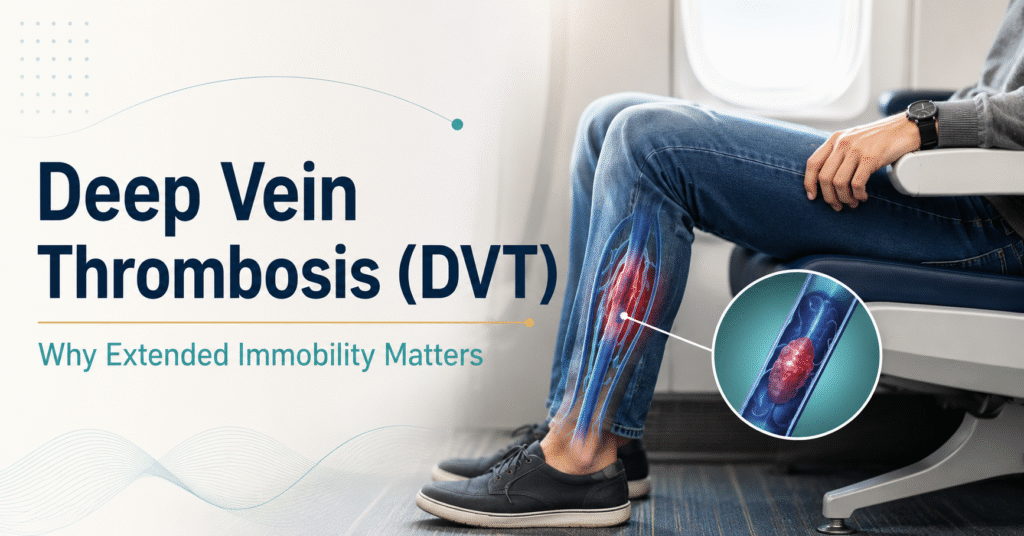
Deep Vein Thrombosis (DVT) is a serious vascular condition that occurs when a blood clot forms in one of the deep veins, most commonly in the legs. While Deep Vein Thrombosis (DVT) can affect anyone, one of the most significant and often overlooked risk factors is extended immobility. Whether you’re sitting through a long flight, recovering after surgery, working at a desk for long hours, or confined to bed due to illness, staying still for extended periods can slow blood circulation and increase the risk of clot formation.
The good news is that Deep Vein Thrombosis (DVT) is often preventable. Understanding why prolonged immobility increases the risk and learning simple preventive measures can help protect your vascular health and reduce the chances of life-threatening complications.
What is Deep Vein Thrombosis (DVT)?
Deep Vein Thrombosis (DVT) occurs when a blood clot (thrombus) develops in a deep vein, usually in the calf, thigh, or pelvis. Veins carry blood back to the heart, and healthy blood flow depends on properly functioning vein valves and regular muscle movement. When blood flow slows or becomes stagnant, blood can collect in the veins and form a clot.
Although the clot may initially remain in the leg, it can become dangerous if part of it breaks away and travels to the lungs. This condition is known as a Pulmonary Embolism (PE) and requires immediate emergency treatment. Early diagnosis and timely management of Deep Vein Thrombosis (DVT) can significantly reduce the risk of severe complications.
Why Does Extended Immobility Increase the Risk of Deep Vein Thrombosis (DVT)?
One of the leading causes of Deep Vein Thrombosis (DVT) is reduced blood circulation caused by prolonged inactivity.
Normally, your calf muscles act as a natural pump that helps move blood upward from the legs toward the heart. Every time you walk or move your legs, these muscles contract and keep blood flowing efficiently. However, when you remain seated or lying down for several hours, this pumping action slows considerably.
As blood pools in the deep veins, the likelihood of clot formation increases.
Extended immobility commonly occurs during:
- Long-distance flights
- Long road trips
- Desk jobs involving prolonged sitting
- Hospital stays
- Recovery after surgery
- Bed rest due to illness or injury
- Reduced mobility in older adults
Even remaining seated for more than four hours without movement can increase your risk, especially if other risk factors are present.
Who Is Most at Risk for Deep Vein Thrombosis (DVT)?
While anyone can develop Deep Vein Thrombosis (DVT), certain individuals have a higher risk.
Age Over 60
Blood vessels naturally become less flexible with age, making circulation less efficient.
Recent Surgery
Major surgeries, especially orthopedic procedures involving the hips or knees, often require prolonged recovery periods, increasing clot risk.
Pregnancy
Hormonal changes and increased pressure on pelvic veins make pregnant women more susceptible to DVT.
Obesity
Excess body weight places additional pressure on leg veins and can reduce healthy blood circulation.
Smoking
Smoking damages blood vessels and increases the tendency for blood to clot.
Family History
Inherited blood-clotting disorders or a family history of DVT can increase your chances of developing the condition.
Previous DVT
Individuals who have experienced Deep Vein Thrombosis (DVT) previously have a greater likelihood of recurrence.
Chronic Medical Conditions
Cancer, heart disease, inflammatory disorders, and certain medications can also increase the risk.
Common Symptoms of Deep Vein Thrombosis (DVT)
One of the challenges with Deep Vein Thrombosis (DVT) is that some people experience no symptoms until complications develop.
When symptoms do occur, they commonly include:
- Swelling in one leg
- Pain or tenderness in the calf
- Warmth over the affected area
- Redness or skin discoloration
- Leg heaviness
- Cramping that persists
These symptoms usually affect only one leg.
If a clot travels to the lungs, emergency symptoms may include:
- Sudden shortness of breath
- Chest pain
- Rapid heartbeat
- Coughing up blood
- Dizziness or fainting
Seek emergency medical care immediately if these symptoms occur.
Everyday Situations That Can Lead to Extended Immobility
Many people associate Deep Vein Thrombosis (DVT) with hospitalization, but extended immobility occurs in everyday life as well.
Long Flights
Flights lasting more than four hours often require sitting in cramped positions with limited leg movement.
Office Work
People who spend eight or more hours sitting at a desk without regular breaks may unknowingly increase their DVT risk.
Long Car Journeys
Continuous driving or sitting in a vehicle without stopping to stretch can reduce circulation.
Hospital Recovery
Patients recovering after surgery or illness often remain inactive for long periods, making preventive care essential.
Sedentary Lifestyle
Limited daily physical activity weakens circulation and contributes to poor vein health over time.
How to Reduce Your Risk of Deep Vein Thrombosis (DVT)
Fortunately, several simple lifestyle habits can significantly reduce your risk of developing Deep Vein Thrombosis (DVT).
Stay Active
Walking regularly improves circulation and strengthens the calf muscles that help pump blood toward the heart.
Move Every Hour
If your work requires prolonged sitting, stand up, stretch, and walk for a few minutes every hour.
Perform Leg Exercises
Simple ankle circles, calf raises, heel lifts, and foot pumps encourage healthy blood flow.
Stay Hydrated
Drinking enough water helps maintain healthy blood consistency and supports circulation.
Wear Compression Stockings
If recommended by your vascular specialist, compression stockings improve circulation and reduce blood pooling.
Maintain a Healthy Weight
Weight management reduces pressure on leg veins and improves overall vascular health.
Follow Post-Surgery Instructions
After surgery, follow your doctor’s advice regarding movement, medications, and compression therapy to lower the risk of clot formation.
How is Deep Vein Thrombosis (DVT) Diagnosed?
Early diagnosis plays a critical role in preventing complications.
Your vascular specialist may recommend:
- Duplex Ultrasound to identify blood clots and evaluate blood flow.
- D-Dimer Blood Test to detect abnormal clotting activity.
- CT Venography or MR Venography for detailed imaging in selected cases.
Prompt diagnosis allows treatment to begin before the clot grows or travels to the lungs.
Treatment Options for Deep Vein Thrombosis (DVT)
Treatment depends on the location, size, and severity of the blood clot.
Common treatment options include:
- Anticoagulant (blood-thinning) medications
- Compression stockings
- Catheter-directed thrombolysis
- Mechanical thrombectomy in selected patients
- Lifestyle changes to prevent recurrence
The primary goals are to prevent clot enlargement, reduce symptoms, restore healthy circulation, and prevent pulmonary embolism.
When Should You See a Vascular Specialist?
Schedule an evaluation if you notice:
- Swelling in one leg
- Persistent calf pain
- Redness or warmth over a vein
- Leg heaviness that doesn’t improve
- Unexplained tenderness
Seek emergency medical attention immediately if you develop:
- Sudden chest pain
- Difficulty breathing
- Rapid heartbeat
- Coughing up blood
These symptoms could indicate a pulmonary embolism, which requires urgent treatment.
Conclusion
Deep Vein Thrombosis (DVT) is a serious but largely preventable vascular condition. Extended immobility—whether during travel, office work, surgery recovery, or prolonged bed rest—can significantly slow blood circulation and increase the risk of dangerous blood clots. Fortunately, staying active, taking regular movement breaks, maintaining a healthy lifestyle, and recognizing early warning signs can greatly reduce your risk.
If you experience symptoms such as persistent leg swelling, calf pain, redness, or warmth, don’t ignore them. Early diagnosis and timely treatment can prevent potentially life-threatening complications.
At Lumina Vein and Vascular Center, our vascular specialists provide comprehensive evaluation, diagnosis, and advanced minimally invasive treatment for Deep Vein Thrombosis (DVT) and other vascular conditions. We are committed to helping you maintain healthy circulation, prevent complications, and improve your overall quality of life.
Frequently Asked Questions (FAQs)
1. Can extended immobility cause Deep Vein Thrombosis (DVT)?
Yes. Sitting or lying down for long periods slows blood circulation, increasing the risk of Deep Vein Thrombosis (DVT), especially during long flights, surgery recovery, or prolonged bed rest.
2. What are the first signs of Deep Vein Thrombosis (DVT)?
Early symptoms may include swelling in one leg, calf pain, tenderness, redness, warmth, and a feeling of heaviness. Some people may not notice symptoms until the condition becomes more serious.
3. How can I prevent Deep Vein Thrombosis (DVT) while traveling?
Walk whenever possible, stretch your legs every hour, stay hydrated, perform ankle exercises while seated, and wear compression stockings if recommended by your doctor.
4. Is Deep Vein Thrombosis (DVT) life-threatening?
It can be. If a blood clot travels to the lungs, it can cause a pulmonary embolism, a medical emergency requiring immediate treatment.
5. When should I see a doctor for Deep Vein Thrombosis (DVT)?
Consult a vascular specialist if you experience persistent leg swelling, calf pain, redness, or warmth. Seek emergency medical care immediately if you develop chest pain, shortness of breath, or cough up blood.