
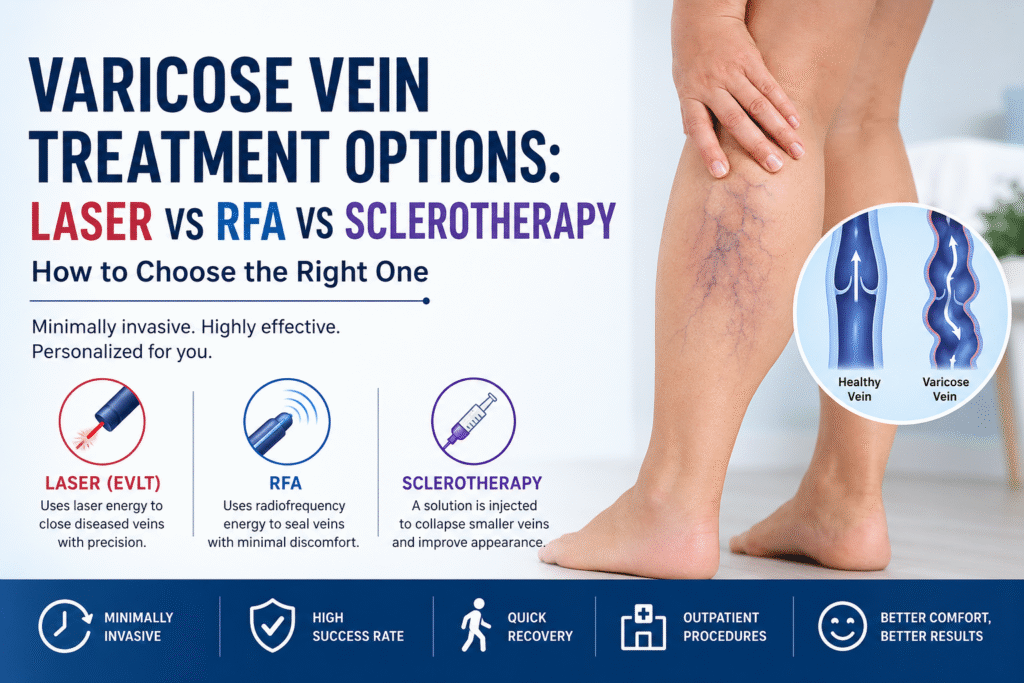
Varicose veins are a common condition that affects millions of people worldwide. They are more than just a cosmetic concern—they can cause pain, swelling, heaviness, and discomfort that interfere with daily life. Fortunately, modern medicine offers several minimally invasive treatment options that effectively treat varicose veins without the need for traditional surgery.
If you’ve been researching varicose vein treatment options, you’ve likely come across Endovenous Laser Treatment (EVLT), Radiofrequency Ablation (RFA), and Sclerotherapy. While all three treatments are highly effective, each is designed for different types of veins and different stages of venous disease.
So, how do you know which one is right for you?
This comprehensive guide explains how each procedure works, their benefits, recovery process, and how vascular specialists determine the best treatment based on your individual condition.
What Are Varicose Veins?
Varicose veins are enlarged, twisted veins that develop when the valves inside your veins stop functioning properly. Instead of flowing upward toward the heart, blood begins to pool inside the veins, causing them to enlarge.
Although they most commonly occur in the legs, varicose veins can affect people of all ages and become progressively worse if left untreated.
Common Symptoms
- Aching or throbbing legs
- Heaviness in the legs
- Swelling around the ankles
- Burning sensation
- Night cramps
- Itching around the veins
- Skin discoloration
- Visible blue or purple veins
If ignored, varicose veins may lead to skin ulcers, bleeding, blood clots, or chronic venous insufficiency.
.Why Is a Doppler Ultrasound Necessary Before Treatment?
Before recommending any treatment, your vascular specialist performs a Venous Doppler Ultrasound.
This painless imaging test provides valuable information about:
- Blood flow direction
- Valve function
- Vein diameter
- Severity of venous reflux
- Presence of blood clots
- Exact location of damaged veins
Without a Doppler ultrasound, selecting the most effective treatment becomes difficult. It is considered the gold standard for diagnosing varicose veins and planning treatment.
What Is Endovenous Laser Treatment (EVLT)?
Endovenous Laser Treatment (EVLT) is one of the most commonly recommended treatments for larger varicose veins.
During the procedure, a thin laser fiber is inserted into the diseased vein through a tiny incision. Laser energy heats the vein wall, causing it to collapse and seal shut. Over time, the body naturally absorbs the treated vein while blood is redirected through healthy veins.
Best For
- Large varicose veins
- Great saphenous vein reflux
- Patients with pain and swelling
- Chronic venous insufficiency
Benefits of EVLT
- Minimally invasive
- No stitches required
- Performed under local anesthesia
- Minimal scarring
- High success rate
- Quick recovery
- Outpatient procedure
Recovery
Most patients can walk immediately after treatment and return to work within one or two days.
What Is Radiofrequency Ablation (RFA)?
Radiofrequency Ablation (RFA) is another minimally invasive treatment used to close damaged veins.
Instead of laser energy, RFA uses controlled radiofrequency energy to gently heat the vein walls, causing them to collapse and seal.
Many vascular specialists recommend RFA because patients often experience less bruising and discomfort during recovery.
Best For
- Large refluxing veins
- Patients looking for faster recovery
- Symptomatic varicose veins
- Chronic venous disease
Benefits of RFA
- Less post-procedure discomfort
- Faster recovery
- Minimal bruising
- Excellent long-term results
- Local anesthesia
- Outpatient treatment
Recovery
Patients usually resume their normal routine within one or two days.
What Is Sclerotherapy?
Sclerotherapy is a minimally invasive procedure used to treat smaller varicose veins and spider veins.
Instead of using heat, the doctor injects a specially formulated medical solution directly into the affected vein. The solution irritates the vein lining, causing it to collapse and gradually disappear over several weeks.
Best For
- Spider veins
- Small varicose veins
- Cosmetic vein concerns
- Residual veins after EVLT or RFA
Benefits
- No surgery
- No incisions
- Usually no anesthesia
- Quick treatment sessions
- Minimal downtime
- Excellent cosmetic results
Some patients may require multiple sessions depending on the number and size of the veins.
Laser vs RFA vs Sclerotherapy: Comparison
| Feature | Laser (EVLT) | RFA | Sclerotherapy |
| Best for | Large veins | Large veins | Small veins & spider veins |
| Uses heat | Yes | Yes | No |
| Incision | Tiny | Tiny | None |
| Local anesthesia | Yes | Yes | Usually not required |
| Recovery | 1–2 days | 1–2 days | Same day |
| Hospital stay | No | No | No |
| Cosmetic results | Excellent | Excellent | Excellent for small veins |
Which Treatment Is Right for You?
There is no single treatment that is best for everyone.
Your vascular specialist considers several important factors before recommending the ideal procedure.
These include:
- Vein size
- Severity of reflux
- Doppler ultrasound findings
- Your symptoms
- Cosmetic concerns
- Previous vein treatments
- Lifestyle
- Overall health
In many cases, combining treatments provides the best results. For example, larger veins may be treated with EVLT or RFA, while smaller remaining veins are treated with sclerotherapy.
Recovery Tips After Varicose Vein Treatment
Following your doctor’s advice helps ensure a smooth recovery and reduces the chance of recurrence.
Recommended Aftercare
- Walk for at least 20–30 minutes daily.
- Wear compression stockings as instructed.
- Avoid prolonged standing during the first few days.
- Stay hydrated.
- Avoid strenuous exercise for a short period.
- Attend all follow-up appointments.
Most patients return to their regular routine within one or two days.
Are These Treatments Safe?
Yes.
Laser treatment, RFA, and sclerotherapy are considered safe and effective when performed by an experienced vascular specialist.
Temporary side effects may include:
- Mild bruising
- Swelling
- Tenderness
- Temporary skin discoloration
- Tightness along the treated vein
Serious complications are rare when proper evaluation and ultrasound guidance are used.
Expert Insight
Dr. Uday Ravi believes that successful varicose vein treatment begins with an accurate diagnosis rather than selecting the newest technology.
A detailed Doppler ultrasound helps identify the exact cause of venous reflux, allowing the doctor to recommend the treatment that provides the best long-term results for each patient.
Frequently Asked Questions
Which treatment is the best for varicose veins?
There is no universal best treatment. The ideal option depends on the size of the veins, symptoms, and Doppler ultrasound findings.
Is laser treatment painful?
Most patients experience only mild discomfort because the procedure is performed under local anesthesia.
Can varicose veins return after treatment?
The treated veins usually remain closed permanently. However, new varicose veins can develop over time due to genetics, aging, pregnancy, or prolonged standing.
Can Laser, RFA, and Sclerotherapy be combined?
Yes. Many patients achieve the best results through a combination of treatments tailored to their condition.
How soon can I return to work?
Most patients return to work within 24–48 hours after treatment, depending on the procedure performed.
Why Choose Lumina Vein and Vascular Center?
At Lumina Vein and Vascular Center, every patient receives a comprehensive clinical evaluation and Doppler ultrasound before treatment. This personalized approach ensures the most suitable procedure is selected, helping relieve symptoms, improve circulation, and prevent future complications.
Our experienced vascular specialists use advanced minimally invasive techniques to provide safe, effective, and long-lasting relief from varicose veins.
Conclusion
Modern varicose vein treatment options such as Laser (EVLT), Radiofrequency Ablation (RFA), and Sclerotherapy have transformed the way varicose veins are treated. These procedures are minimally invasive, highly effective, and allow patients to recover quickly without lengthy hospital stays.
Choosing the right treatment is not about selecting the latest technology—it is about identifying the underlying cause of your vein problem through a detailed Doppler ultrasound and creating a personalized treatment plan.
If you’re experiencing symptoms such as leg pain, swelling, heaviness, or visible varicose veins, don’t delay seeking medical advice. Early diagnosis and timely treatment can improve your quality of life and help prevent complications in the future.
Book a consultation with Lumina Vein and Vascular Center today and take the first step toward healthier, pain-free legs.