
Introduction
Radiofrequency ablation for varicose veins is a minimally invasive treatment used to close faulty veins that contribute to varicose veins and venous reflux. Instead of surgically removing the vein, the procedure uses controlled radiofrequency heat to seal the affected vein from the inside. Blood is then redirected through healthier veins.
Varicose veins can cause more than visible, twisted veins on the legs. Some people experience aching, heaviness, swelling, itching, or discomfort that becomes worse after prolonged standing. When symptoms are persistent, a vascular specialist may recommend an ultrasound evaluation to determine whether an underlying vein is allowing blood to flow backward.
For suitable patients, radiofrequency ablation for varicose veins can provide an effective minimally invasive option with small skin incisions, local anaesthesia in many cases, and a relatively quick return to normal activities.
What Is Radiofrequency Ablation for Varicose Veins?
Radiofrequency ablation for varicose veins is an endovenous treatment that uses radiofrequency energy to heat and close an abnormal vein.
Healthy leg veins contain valves that help blood travel upward toward the heart. When these valves become weak or damaged, blood can flow backward and collect in the veins. This is known as venous reflux and can contribute to the development of varicose veins.
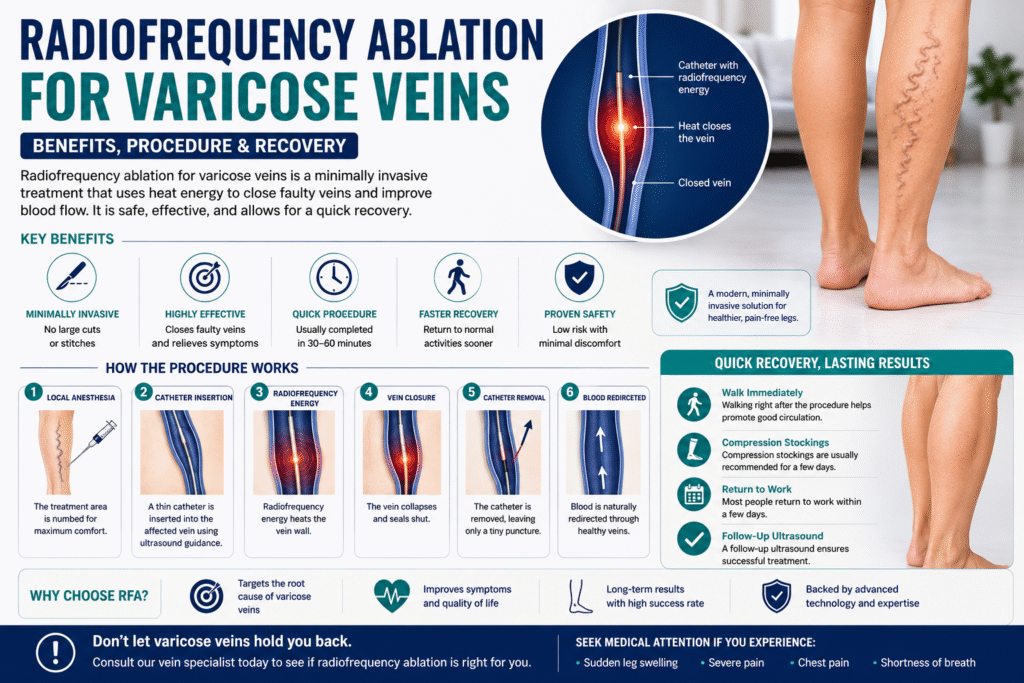
During RFA, a thin catheter is guided into the affected vein using ultrasound. Radiofrequency energy heats the vein wall, causing the vein to shrink and seal. The body gradually absorbs the treated vein, while blood is redirected through other healthy veins.
Not every varicose vein is suitable for RFA. A vascular specialist generally performs a clinical assessment and duplex ultrasound before recommending the procedure.
Who May Benefit from Radiofrequency Ablation?
RFA may be considered for people with varicose veins associated with symptoms or underlying venous reflux.
A specialist may consider RFA when a patient has:
- Aching or painful varicose veins
- Leg heaviness or tiredness
- Swelling
- Symptoms that worsen after prolonged standing
- Recurrent venous problems
- Skin changes associated with chronic venous disease
- Ultrasound-confirmed reflux in a treatable vein
The decision should be individualized. The appearance of varicose veins alone does not determine whether RFA is appropriate. A duplex ultrasound helps identify the veins responsible for the reflux and guides treatment planning.
Benefits of Radiofrequency Ablation for Varicose Veins
One of the main reasons radiofrequency ablation for varicose veins has become a commonly used treatment is that it avoids many of the larger incisions associated with traditional vein surgery.
1. Minimally Invasive Procedure
RFA is performed through a small access point rather than requiring a large surgical incision. This can reduce bruising, wound-related problems, and postoperative discomfort compared with traditional surgical vein stripping.
2. Usually Performed Under Local Anaesthesia
RFA is commonly performed using local or tumescent anaesthesia, which numbs the treatment area. This can allow patients to recover more quickly than procedures requiring general anaesthesia.
3. Short Treatment Time
The procedure itself may take around 30 minutes for one leg, although the total appointment time can be longer depending on preparation and recovery.
4. Same-Day Treatment in Many Cases
RFA is commonly performed as an outpatient or day-case procedure. Patients can generally walk shortly after treatment and return home the same day if medically appropriate.
5. Faster Return to Daily Activities
Many patients can return to normal activities relatively quickly. The exact recovery period depends on the individual, their occupation, the extent of treatment, and their doctor’s instructions. Some hospital guidance advises returning to work within a few days, while people with physically demanding jobs may need longer.
6. Can Improve Varicose Vein Symptoms
The goal of RFA is to close the refluxing vein that is contributing to the problem. Treating the underlying reflux can help improve symptoms associated with varicose veins.
How Is Radiofrequency Ablation Performed?
Understanding the radiofrequency ablation for varicose veins procedure can help you know what to expect.
Step 1: Vascular Assessment
Before treatment, the specialist evaluates your symptoms and performs a duplex ultrasound. The ultrasound identifies the affected veins and checks whether RFA is suitable.
Step 2: Marking the Vein
The treatment vein may be identified and marked using ultrasound before the procedure.
Step 3: Local Anaesthesia
The skin and tissues around the treatment area are numbed. Tumescent anaesthesia may also be injected around the vein to provide comfort and protect surrounding tissues from the heat.
Step 4: Catheter Placement
A small access point is made in the skin, and a thin catheter is guided into the affected vein using ultrasound.
Step 5: Radiofrequency Energy
The catheter delivers controlled heat to the vein wall. The heat causes the vein to shrink and close.
Step 6: Catheter Removal
Once the vein has been treated, the catheter is removed and a small dressing is placed over the access point.
In some patients, additional varicose veins may require another treatment, such as phlebectomy or foam sclerotherapy, depending on the clinical findings.
What Is Recovery Like After Radiofrequency Ablation?
Recovery after radiofrequency ablation for varicose veins is generally shorter than recovery after traditional vein surgery, but individual experiences vary.
Walking
Patients are generally encouraged to walk shortly after treatment. Regular movement is important during recovery and can help reduce the risk of blood clots.
Compression Stockings
Your doctor may recommend a compression stocking or bandage for a specific period after treatment. Instructions vary depending on the procedure and individual circumstances.
Returning to Work
Many people can return to work within a few days. Those with desk-based jobs may return sooner, while people whose work involves prolonged standing, heavy lifting, or strenuous activity may require additional recovery time.
Exercise
Gentle walking is generally encouraged, but strenuous exercise, heavy lifting, contact sports, and swimming may need to be avoided temporarily. Your treating specialist should provide specific instructions based on your procedure.
What Can You Expect After the Procedure?
Some temporary effects are common after RFA.
You may experience:
- Mild soreness
- Bruising
- Tenderness along the treated vein
- Mild swelling
- A firm or cord-like feeling along the treated vein
- Temporary skin numbness
These symptoms generally improve as the treated vein heals. Some patients may experience tenderness for several days or weeks.
It is also important to understand that not every visible varicose vein will necessarily disappear immediately after treatment. Additional veins may require separate treatment depending on the underlying venous disease.
Are There Any Risks?
Like any medical procedure, radiofrequency ablation for varicose veins has potential risks, although serious complications are uncommon.
Possible complications include:
- Bruising
- Temporary pain or tenderness
- Skin irritation
- Temporary numbness
- Skin pigmentation
- Infection at the access site
- Rare skin burns
- Blood clots such as DVT
The risk of serious complications is low, but patients should follow their specialist’s post-procedure instructions carefully.
Seek urgent medical attention if you develop symptoms such as sudden chest pain, difficulty breathing, coughing up blood, or significant new leg pain or swelling after treatment. These symptoms can indicate a serious complication and require immediate assessment.
Radiofrequency Ablation vs Traditional Varicose Vein Surgery
Traditional vein surgery can involve larger incisions and removal of the affected vein. RFA uses a catheter and controlled heat to close the problematic vein from inside the body.
Because RFA generally involves smaller access points, it can offer advantages such as less extensive bruising, less postoperative pain, and a faster return to normal activities for many suitable patients.
However, the best treatment depends on the individual’s vein anatomy, symptoms, ultrasound findings, and overall health. RFA is not automatically the right choice for every patient.
When Should You Consider Varicose Vein Treatment?
Visible varicose veins do not always require a procedure. However, you should consider a vascular evaluation if you experience:
- Persistent leg pain or aching
- Leg heaviness
- Recurrent swelling
- Itching around the veins
- Skin discoloration
- Increasingly prominent veins
- Non-healing wounds
- Bleeding from a varicose vein
A specialist can determine whether your symptoms are caused by venous reflux and whether radiofrequency ablation for varicose veins or another treatment would be appropriate.
Conclusion
Radiofrequency ablation for varicose veins is a minimally invasive treatment that uses controlled radiofrequency heat to close faulty veins responsible for venous reflux. For appropriately selected patients, it can provide symptom relief while avoiding the larger incisions associated with traditional vein surgery.
The procedure is commonly performed under local anaesthesia, often as a day-case treatment, and many patients can return to normal activities within a relatively short period. However, recovery and treatment outcomes vary from person to person.
If you have painful, swollen, or increasingly prominent varicose veins, a vascular assessment can help identify the underlying problem. A duplex ultrasound is an important part of evaluating venous reflux and determining whether RFA or another treatment is suitable.
At Lumina Vein and Vascular Center, patients can receive specialized evaluation for varicose veins and discuss minimally invasive treatment options based on their individual vascular condition. Early assessment can help you understand your vein health and choose an appropriate treatment plan.
Frequently Asked Questions
Is radiofrequency ablation painful?
RFA is usually performed under local or tumescent anaesthesia, so significant pain during the procedure is generally minimized. Some soreness, bruising, or tenderness can occur after treatment.
How long does radiofrequency ablation for varicose veins take?
Treatment time varies, but one leg may take around 30 minutes. The overall appointment can take longer because of preparation and post-procedure monitoring.
How quickly can I walk after RFA?
Patients are generally encouraged to walk shortly after the procedure. Regular walking is an important part of recovery.
How soon can I return to work after RFA?
Many patients return to work within a few days, although the timing depends on the type of work and individual recovery. People with physically demanding jobs may need additional time.
Is RFA suitable for everyone with varicose veins?
No. Not every varicose vein is suitable for RFA. A vascular specialist should evaluate your veins, usually with duplex ultrasound, before recommending treatment.