
Introduction
Varicose veins are enlarged, twisted veins that commonly appear on the legs. They develop when the valves inside the veins do not work properly, allowing blood to flow backward and pool in the veins. This increases pressure inside the veins and can make them swollen and visible beneath the skin.
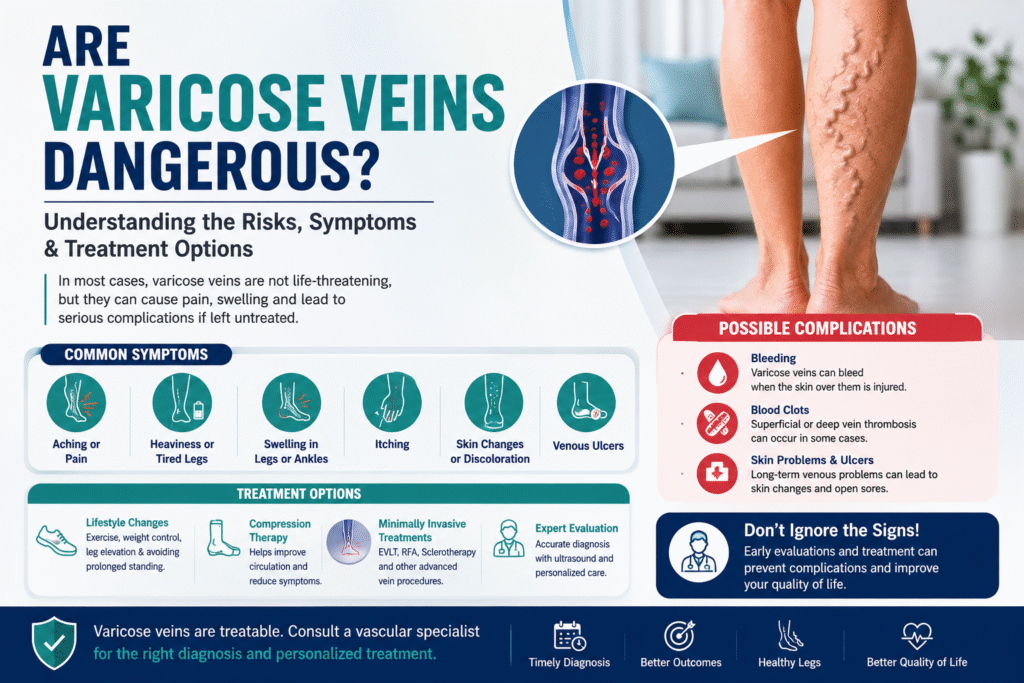
But are varicose veins dangerous? In most cases, varicose veins are not life-threatening and may remain primarily a cosmetic concern. However, some people develop pain, swelling, skin changes, bleeding, inflammation, or leg ulcers. Rarely, blood clots can also occur.
Knowing which symptoms are harmless and which ones require medical attention is important. Early evaluation by a vascular specialist can help identify underlying venous problems and determine whether treatment is necessary.
What Causes Varicose Veins?
To understand whether varicose veins are dangerous, it helps to understand how healthy leg veins work.
Veins carry blood from the legs back toward the heart. Because blood has to move upward against gravity, veins contain one-way valves that help keep blood moving in the correct direction.
When these valves become weak or damaged, blood can flow backward, known as venous reflux. The resulting increase in pressure can cause the veins to enlarge, twist, and become more prominent.
Factors that can increase the likelihood of developing varicose veins include:
- Family history of varicose veins
- Increasing age
- Pregnancy
- Being overweight
- Prolonged standing
- Prolonged sitting
- Previous DVT
- Reduced physical activity
.Are Varicose Veins Dangerous?
For most people, varicose veins are not dangerous. They are common and often develop gradually over many years. Some people have visible veins without significant symptoms or complications.
However, varicose veins can sometimes indicate an underlying chronic venous circulation problem. If symptoms become persistent or complications develop, medical evaluation may be necessary.
Possible problems associated with varicose veins include:
- Leg pain and aching
- Heaviness or tiredness
- Leg or ankle swelling
- Itching and skin irritation
- Skin discoloration
- Varicose eczema
- Venous ulcers
- Superficial vein thrombosis
- Bleeding from a varicose vein
The important point is that varicose veins should not automatically be considered dangerous, but they should not always be ignored either.
What Symptoms Can Varicose Veins Cause?
Some people with varicose veins have no symptoms apart from their appearance. Others may experience symptoms that become more noticeable after prolonged standing or toward the end of the day.
Common symptoms include:
Leg Pain or Aching
The affected leg may feel sore, achy, or uncomfortable, particularly after standing for extended periods.
Heavy or Tired Legs
Some people describe their legs as feeling heavy, tired, or fatigued.
Swelling
Swelling can occur around the ankles and lower legs and may become worse later in the day.
Itching
The skin around affected veins may become itchy or irritated.
Skin Changes
Long-standing venous problems can cause changes such as darkening, dryness, scaling, or inflammation around the lower legs.
If these symptoms are persistent or worsening, it is worth discussing them with a vascular specialist.
When Can Varicose Veins Become Serious?
Although most varicose veins do not lead to major complications, advanced venous disease can cause problems that require medical treatment.
1. Venous Leg Ulcers
One of the more significant complications is a venous leg ulcer. These are open sores that commonly develop around the lower leg or ankle and may take a long time to heal.
Persistent wounds should be evaluated by a healthcare professional because poor healing can increase the risk of infection and other complications.
2. Skin Changes and Varicose Eczema
Chronic venous pressure can affect the skin around the ankles. The skin may become itchy, dry, inflamed, discolored, or thickened.
Varicose eczema is associated with underlying venous circulation problems and may require treatment to manage both the skin condition and the underlying venous disease.
3. Bleeding
A superficial varicose vein can occasionally bleed, particularly after minor trauma or when the skin over the vein has become fragile.
Bleeding from a varicose vein should receive prompt medical attention. Clinical guidelines also recommend evaluation of the underlying venous problem after bleeding has been controlled to reduce the risk of recurrence.
4. Blood Clots
Blood clots can occur in veins affected by venous disease. Superficial vein thrombosis can cause a hard, painful vein and inflammation. Deep vein thrombosis (DVT) is a separate and more serious condition involving the deep veins.
Sudden leg swelling or persistent unexplained leg pain should be medically assessed rather than assumed to be caused by ordinary varicose veins.
Are Painful Varicose Veins More Concerning?
Painful varicose veins do not necessarily mean that the condition is dangerous, but persistent symptoms can indicate that the veins are affecting your quality of life or that there is underlying venous reflux.
The Society for Vascular Surgery notes that varicose veins can cause aching, fatigue, swelling, skin changes, and sores, and treatment may improve symptoms and quality of life.
If pain, heaviness, swelling, itching, or skin changes are interfering with your daily activities, a vascular evaluation can help determine whether treatment would be beneficial.
How Are Varicose Veins Diagnosed?
A vascular specialist generally begins with a physical examination and discussion of your symptoms and medical history.
A duplex ultrasound is commonly used to evaluate blood flow through the veins. It can identify abnormal venous reflux and help determine which veins are contributing to the problem.
An ultrasound assessment is particularly useful because the visible veins on the skin may not always reveal the complete underlying problem.
How Are Varicose Veins Treated?
Not everyone with varicose veins needs a procedure. Treatment depends on symptoms, examination findings, ultrasound results, and the individual’s overall health.
Lifestyle Measures
For mild symptoms, helpful measures may include:
- Regular walking and physical activity
- Maintaining a healthy weight
- Avoiding prolonged standing or sitting
- Elevating the legs while resting
- Taking regular movement breaks
Walking activates the calf muscles, which help move blood out of the legs and support venous circulation.
Compression Therapy
Compression stockings may help reduce symptoms such as swelling and aching in selected patients. However, they are not appropriate for everyone, particularly people with certain arterial circulation problems, so professional advice is recommended.
Minimally Invasive Treatments
When symptomatic varicose veins require intervention, modern treatments may include:
- Endovenous Laser Treatment (EVLT)
- Radiofrequency Ablation (RFA)
- Foam Sclerotherapy
- Other vein-closure procedures
Endothermal treatments such as laser or radiofrequency ablation close the problematic vein so blood can be redirected through healthier veins.
The most appropriate treatment should be selected after a vascular assessment and duplex ultrasound.
When Should You See a Vascular Specialist?
You should consider a vascular evaluation if you have varicose veins accompanied by:
- Persistent pain or aching
- Leg heaviness
- Recurrent swelling
- Persistent itching
- Skin discoloration
- Skin thickening or inflammation
- A wound that is slow to heal
- Bleeding from a varicose vein
The NHS recommends medical assessment for symptomatic varicose veins and sores that have not healed. Bleeding varicose veins require urgent medical attention.
If you develop sudden leg swelling or pain, especially with chest pain or difficulty breathing, seek urgent medical care because these symptoms can indicate a potentially serious blood clot or another medical emergency.
Can Varicose Veins Be Prevented?
There is no guaranteed way to prevent varicose veins, particularly when genetics or age play a role. However, maintaining healthy circulation may help reduce symptoms and support overall vein health.
Consider:
- Walking regularly
- Staying physically active
- Maintaining a healthy weight
- Avoiding long periods of sitting or standing still
- Elevating your legs when resting
- Protecting your skin from injury
- Managing other vascular risk factors
These measures may help with symptoms, although they cannot always correct faulty vein valves once venous reflux has developed.
Conclusion
So, are varicose veins dangerous? Usually, no. Most varicose veins are not life-threatening and may cause little more than visible changes or mild discomfort. However, persistent pain, swelling, skin changes, ulcers, bleeding, or other complications can indicate more advanced venous disease and should not be ignored.
The appearance of varicose veins alone does not always tell you how significant the underlying vein problem is. A proper vascular assessment and duplex ultrasound can help identify venous reflux and determine whether monitoring, lifestyle measures, or minimally invasive treatment is appropriate.
At Lumina Vein and Vascular Center, patients can receive specialized evaluation and treatment for varicose veins and other venous conditions. If your varicose veins are becoming painful, swollen, or increasingly prominent, early professional evaluation can help you understand your condition and explore appropriate treatment options.
Frequently Asked Questions
Are varicose veins dangerous if they don’t hurt?
Usually, painless varicose veins are not dangerous. However, it is still useful to monitor them for changes such as swelling, skin discoloration, ulcers, or bleeding.
Can varicose veins cause blood clots?
Varicose veins can be associated with superficial vein thrombosis, and people with venous disease may also have other risk factors for blood clots. A deep vein thrombosis is a separate condition involving the deep veins and requires medical assessment.
When should varicose veins be treated?
Treatment may be considered when varicose veins cause troublesome symptoms such as pain, heaviness, swelling, itching, or skin changes, or when complications such as ulcers or bleeding develop.
Can varicose veins go away on their own?
Varicose veins generally do not disappear on their own once the underlying vein valves have become dysfunctional. Symptoms can sometimes be managed with lifestyle measures, but persistent or troublesome veins may require specialist evaluation.
Is surgery always required for varicose veins?
No. Modern varicose vein treatment often uses minimally invasive procedures such as endovenous laser treatment, radiofrequency ablation, or sclerotherapy when intervention is appropriate. Traditional surgery is now used in selected situations.