
Introduction
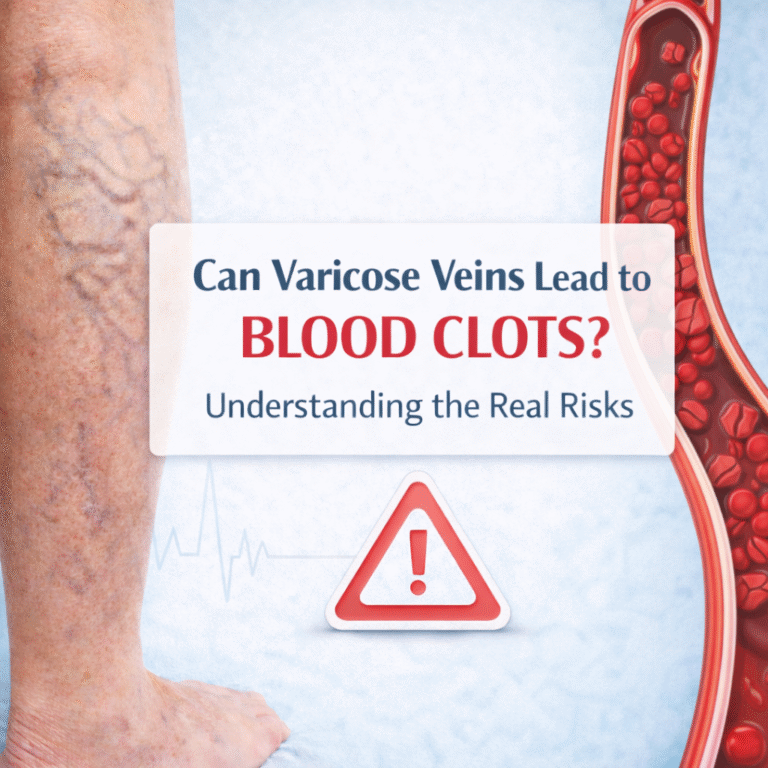
Varicose veins are often dismissed as harmless, but many patients worry about a serious complication — blood clots. While not all varicose veins cause clots, untreated venous disease can increase the risk of certain clotting conditions. At Lumina Vein & Vascular Center, patient education focuses on identifying risks early and preventing dangerous outcomes.
What Are Blood Clots?
Blood clots form when blood thickens and clumps together, blocking normal blood flow. In the legs, clots may occur in:
- Superficial veins (Superficial Thrombophlebitis)
- Deep veins (Deep Vein Thrombosis – DVT)
How Varicose Veins Increase Clot Risk
Varicose veins cause:
- Sluggish blood flow
- Blood pooling
- Inflammation of vein walls
This environment can promote clot formation, especially in superficial veins.
Types of Clots Linked to Varicose Veins
1. Superficial Thrombophlebitis
- Painful, red, hard vein
- Usually not life-threatening
- Indicates advanced venous disease
2. Deep Vein Thrombosis (Less Common)
- Occurs in deeper veins
- Can be dangerous if clot travels to lungs (pulmonary embolism)
Varicose veins slightly increase DVT risk, especially in elderly or immobile patients.
Warning Signs of Blood Clots
- Sudden leg swelling
- Severe pain or tenderness
- Redness or warmth
- Hard cord-like vein
- Shortness of breath (medical emergency)
Immediate medical attention is required.
How Treatment Reduces Clot Risk
Treating varicose veins improves blood flow and reduces stasis:
Early treatment significantly lowers future clot risk.
Expert Opinion – Dr. Uday Ravi
“Varicose veins can increase the risk of superficial clots and indicate poor circulation. Early treatment reduces clot risk and prevents serious complications.”
Dr. Uday Ravi MBBS MS FMAS FIAGES FISCP FALS FARIS DMAS (France)
Consultant Vascular & Laser Surgeon
FAQs
Q1: Do all varicose veins cause blood clots?
👉 No, but untreated varicose veins increase clot risk.
Q2: Are blood clots common in varicose veins?
👉 Superficial clots are more common than deep clots.
Q3: Can laser treatment prevent clots?
👉 Yes, by improving blood flow and eliminating diseased veins.
Q4: When should I see a doctor urgently?
👉 Sudden swelling, severe pain, or breathlessness need immediate care.
Takeaway
Varicose veins can increase the risk of blood clots if ignored. Early diagnosis and treatment at Lumina Vein & Vascular Center help protect your circulation and overall health.
📍 Lumina Vein & Vascular Center
👨⚕️ Dr. Uday Ravi MBBS MS FMAS FIAGES FISCP FALS FARIS DMAS (France)
📞 +91 88844 77725
🌐 www.luminaveincenter.com