
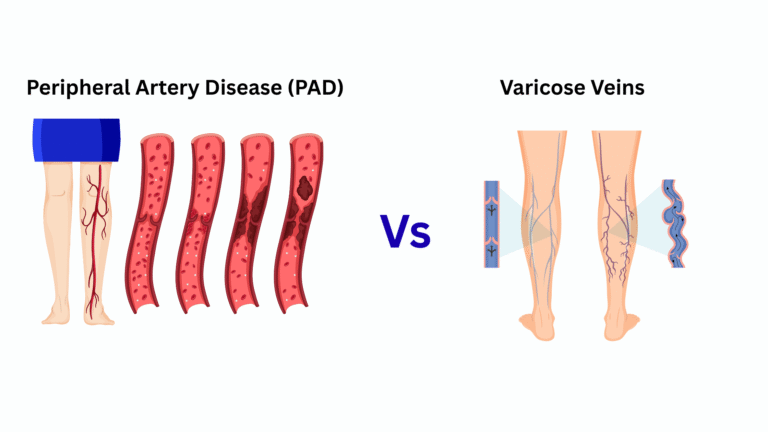
Understanding Two Common Leg Conditions
When patients experience leg pain, cramps, or swelling, they often assume it’s due to varicose veins. However, sometimes the real issue could be Peripheral Artery Disease (PAD) — a serious condition that affects blood flow to the legs.
Although PAD and varicose veins share some symptoms, they involve completely different blood vessels and require different treatments. Knowing the difference is crucial for accurate diagnosis and effective care
What Are Varicose Veins?
Varicose veins occur when vein valves weaken, causing blood to pool and veins to enlarge. They usually appear as bulging, twisted veins on the legs.
Common Symptoms:
- Visible swollen veins
- Leg heaviness or fatigue
- Swelling around ankles
- Itching or skin discoloration
- Visible swollen veins
Caused by:
- Weak or damaged vein valves
- Prolonged standing or sitting
- Pregnancy or obesity
- Family history
What Is Peripheral Artery Disease (PAD)?
PAD is caused by narrowing or blockage of arteries that supply blood to the legs, often due to plaque buildup (atherosclerosis). This leads to poor circulation and can become serious if untreated.
Common Symptoms:
- Leg pain or cramps during walking (claudication)
- Cold feet or toes
- Non-healing wounds on feet
- Weak pulse in legs
- Pale or shiny skin
Caused by:
- Diabetes
- Smoking
- High cholesterol
- Hypertension
PAD vs Varicose Veins – Key Differences
Feature | Varicose Veins | Peripheral Artery Disease (PAD) |
Affected Vessels | Veins (carry blood to the heart) | Arteries (carry blood from the heart) |
Main Cause | Weak vein valves | Plaque buildup in arteries |
Appearance | Visible bulging veins | No visible veins |
Pain Type | Aching, heaviness | Cramping while walking |
Risk Level | Mostly cosmetic or mild discomfort | Can lead to ulcers or gangrene if untreated |
Treatment | Minimally invasive vein procedures | Medication or angioplasty |
Can PAD and Varicose Veins Coexist?
Yes — some patients may have both conditions, especially those with diabetes, obesity, or poor circulation. A detailed vascular evaluation is necessary to differentiate and plan the right treatment.
At Lumina Vein & Vascular Center, advanced Doppler ultrasound and vascular screening help identify the exact cause of leg pain or swelling, ensuring targeted treatment.
Expert Insight: Dr. Uday Ravi
“PAD and varicose veins are often misunderstood. While varicose veins are primarily cosmetic and cause discomfort, PAD can be a life-threatening vascular condition. Accurate diagnosis is vital to prevent complications like non-healing wounds or amputation in diabetic patients.”
Dr. Uday Ravi MBBS MS FMAS FIAGES FISCP FALS FARIS DMAS (France)
Consultant Vascular & Laser Surgeon
When to See a Vascular Specialist
- Persistent leg pain or cramps while walking
- Visible swollen veins or skin darkening
- Cold feet or non-healing wounds
- Numbness or tingling in legs
Early detection can prevent major complications and ensure faster recovery.
Takeaway
PAD and varicose veins may look similar, but they are very different vascular problems. Proper diagnosis from a qualified vascular specialist ensures you receive the right treatment at the right time.
👉 Book your consultation at Lumina Vein & Vascular Center today!
📞 Call: +91 88844 77725
🌐 Visit: luminaveincenter.com
👨⚕️ Dr. Uday Ravi — Consultant Vascular & Laser Surgeon